You’re tired of wrestling your mower over a raised shed lip. The right wooden ramp transforms that chore into a smooth, safe roll. We’ve found four kits using thick 2×8 lumber and galvanized brackets, with lengths between 44 and 48 inches for a gentle slope. Each one prioritizes traction, so you won’t slip, and weatherproofing, so they last. Ready to find your perfect match?
More Details on Our Top Picks
DIY Ramp Kit 2-Section 22″ Wide 48″ J-Channel
[zw asin=”B0FBP892KW” alt=”DIY Ramp Kit 2-Section 22 Wide 48 J-Channel”]Best Overall
View Latest PriceIf you’re building a permanent wood ramp, this kit is your top pick. You get two aluminum ramps, each 22 inches wide, plus a 48-inch J-channel, end caps, and mounting brackets. But here’s the key: you’ll need to supply six 2×8 lumber boards for the structure. The ramps handle 1500 pounds each, so you’re set for heavy loads. Keep your total ramp length between 4 and 6 feet, though. Going longer risks flexing, and you’d need extra support underneath. Installation videos make assembly straightforward.
- Load Capacity:1500 lbs per ramp
- Ramp Section Width:22 inches per ramp
- Material:Aluminum
- Lumber Requirement:Six 2×8 boards (not included)
- Anti-Slip Feature:Not specified
- Kit Configuration:2 ramps + 1 J-channel
- Additional Feature:Recommended 4–6 ft length
- Additional Feature:Two mounting brackets included
- Additional Feature:Video installation support
44-Inch DIY Shed Ramp Kit for 2×8 Boards 2-Section Reinforced
[zw asin=”B0HGM3BMRL” alt=”44-Inch DIY Shed Ramp Kit for 2×8 Boards 2-Section Reinforced”]Most Stable
View Latest PriceThis kit is your answer for a stable ramp build. You’ll grab six 2×8 boards (not included) and assemble a 44 inch, two section setup. The bottom reinforcement crossbars connect the sections to cut down on flex, so your mower or snow blower rides steady. Anti-slip pads grip firm ground, and limit screws keep everything aligned during use. Built from lightweight aluminum, it holds up to 1,500 pounds. Just measure your opening, threshold height, and tire width first. You’re getting a clean, durable ramp without the guesswork.
- Load Capacity:1500 lbs
- Ramp Section Width:22 inches
- Material:Aluminum
- Lumber Requirement:Six 2×8 boards (not included)
- Anti-Slip Feature:Anti-slip pads at contact points
- Kit Configuration:2-section configurable
- Additional Feature:Bottom reinforcement crossbars
- Additional Feature:Anti-slip contact pads
- Additional Feature:Limit screws for alignment
DIY Ramp Kit – 2-Section 22″ Wide 48″ J-Channel
[zw asin=”B0FBP5W21N” alt=”DIY Ramp Kit – 2-Section 22 Wide 48 J-Channel”]Best Value
View Latest PriceLike a solid, budget friendly start for your DIY loading setup, this kit is a smart choice if you value simplicity over a full, pre built ramp. You get two aluminum sections, each 22 inches wide and 48 inches long. The included J-channel, end caps, brackets, and screws make assembly straightforward. You’ll need to grab six 2×8 lumber boards yourself, plus a metal treadplate if you want extra grip. Each ramp supports a hefty 1500 pounds, so it’s ready for your ATV or lawn tractor. Just keep your ramp length between 4 and 6 feet to avoid flexing.
- Load Capacity:1500 lbs per ramp
- Ramp Section Width:22 inches per ramp
- Material:Aluminum
- Lumber Requirement:Six 2×8 boards (not included)
- Anti-Slip Feature:Not specified
- Kit Configuration:2 ramps + 1 J-channel
- Additional Feature:Metal treadplate not included
- Additional Feature:Four end caps for joining
- Additional Feature:Price-match feedback option
29″ x 48″ Shed Ramp Kit Heavy Duty Shed Ramp 48″ Wide
[zw asin=”B0H8T6WXQP” alt=”29 x 48 Shed Ramp Kit Heavy Duty Shed Ramp 48 Wide”]Heavy-Duty Choice
View Latest PriceYou need a heavy-duty choice for your shed ramp? This 29″ x 48″ kit is built for serious equipment like lawn mowers and ATVs. It’s made from high-strength alloy steel, supporting up to 1500 lbs. The anti-slip punch plate surface features holes that drain water and boost grip, keeping you safe in wet weather. You get two ramps, each 48 inches wide, with a 6.5-inch height. Pre-drilled holes and included hardware mean quick setup. Plus, ergonomic carry handles make repositioning a breeze. No fuss, just solid performance for your heavy loads.
- Load Capacity:1500 lbs
- Ramp Section Width:48 inches per ramp
- Material:High-strength alloy steel
- Lumber Requirement:Not specified (pre-drilled for splicing)
- Anti-Slip Feature:Anti-slip punch plate traction surface
- Kit Configuration:2 ramps, pre-drilled for splicing
- Additional Feature:High-strength alloy steel
- Additional Feature:Ergonomic carry handle
- Additional Feature:Pre-drilled for splicing
Factors to Consider When Choosing a Wood Ramp for Shed
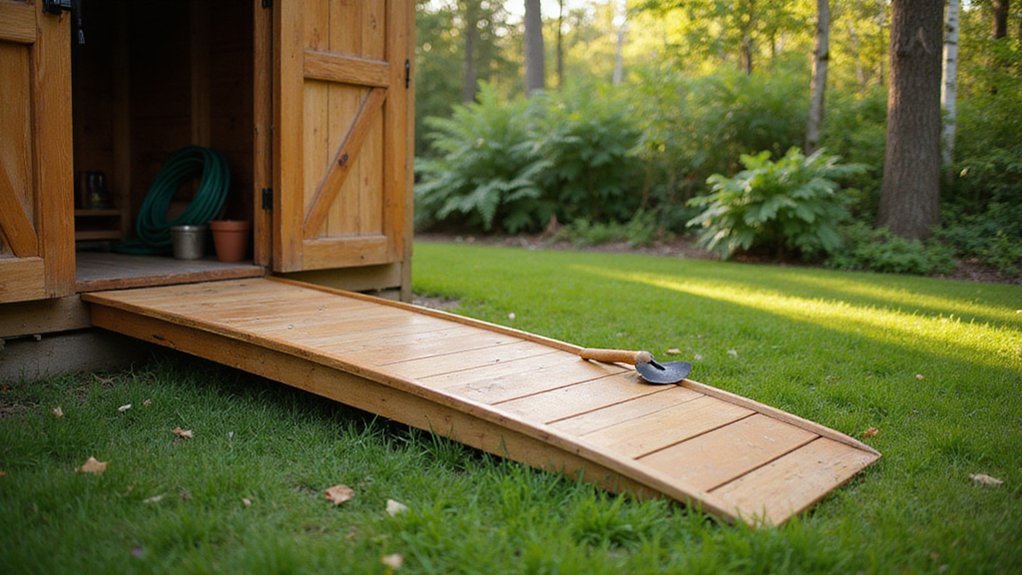
You’ve got to start with load capacity limits, since a ramp that can’t support your mower or tractor is just a hazard. Ramp length essentials come next: a longer ramp means a gentler slope, making it easier to roll heavy items up without strain. And don’t overlook board thickness needs, width and fit for your shed’s doorway, and surface traction safety, because a wobbly or slick ramp will quickly become a frustration.
Load Capacity Limits
When you’re building a wood ramp for your shed, load capacity limits should be at the top of your checklist because they directly determine whether your ramp can safely handle the weight of your mower, ATV, or other heavy equipment. You’ll want that limit to exceed your heaviest load, plain and simple. Check the rated weight per foot too, since that tells you if the ramp can hold up across its entire span, not just at one point. Match that capacity with sturdy lumber, like 2×8 boards, for real structural integrity. Overloading leads to bending, bowing, or outright failure, so don’t push it. And inspect regularly for wear or damage that could quietly compromise safety. A little vigilance now saves a costly, dangerous collapse later.
Ramp Length Essentials
Because the right ramp length makes all the difference between a safe, easy load and a dangerous struggle, you’ll want to choose carefully. Aim for 4 to 6 feet; that’s your sweet spot. Shorter ramps get steep fast, turning every trip into a back-breaking gamble with your gear. Longer options create a gentler slope, which is a godsend for heavier loads. You’ll reduce strain on yourself and the ramp itself, since the angle of ascent won’t fight your momentum.
First, measure the height from your shed floor to the ground. Then, eyeball your equipment’s tire size. That combo tells you the minimum length you need. Don’t guess, measure twice. A flatter approach also means less flexing, so you’re not watching your ramp wobble under pressure. Go long whenever you can; you’ll thank yourself on moving day.
Board Thickness Needs
Length is only half the battle. Your board thickness decides whether that ramp flexes like a springboard or stands firm like a rock. For heavy equipment, you absolutely need 2-inch thick lumber, think 2x8s, not flimsy 2x4s. Thicker boards distribute weight better, so they don’t bow or wobble under a loaded wheelbarrow or mower. You’re risking structural failure with thinner options, and that’s a safety hazard you can’t ignore.
Think of it this way: a 2×4 might handle light foot traffic, but it’ll groan under real weight. Match your boards to the loads you actually haul. If you’re rolling in a riding mower or a generator, upgrade to 2x8s without hesitation. The extra inch of thickness buys you stability, longevity, and peace of mind. Choose wisely, because a sagging ramp is a trip waiting to happen.
Width and Fit
So, how do you make sure your wood ramp actually fits your shed and the loads you’re hauling? First, grab a tape measure and check the opening width of your shed exactly. You want a ramp that sits snug without gaps or overhangs, because a loose fit invites instability.
Next, choose a ramp width that gives you enough room to maneuver. Typically, you should match or slightly exceed the width of your equipment or load. For a wheelbarrow or mower, that means at least 30 inches wide. And don’t forget your shed’s surroundings. Make sure the ramp won’t block paths or hit obstacles during installation.
What if your loads vary or your opening is irregular? Then look for a ramp with adjustable or customizable width. This flexibility lets you adapt to different needs without guesswork. Finally, confirm the ramp provides adequate support for heavy or bulky items. A stable base means safer, smoother access every time.
Surface Traction Safety
Once you’ve nailed down the width and fit, it’s time to focus on how the ramp handles under your feet and gear. You’ll want a textured surface or anti-slip strips built right into the wood. This isn’t just about preventing you from slipping; it stops loaded equipment from sliding backward during a rainy haul. And don’t forget wet or icy conditions, a cheap non-slip mat or coating transforms a slick board into a safe pathway.
For the best grip, look for ramps with:
- Grooved or sanded-in texture
- Pre-applied anti-slip tape
You’ll also need to keep that traction alive. Clean off mud and leaves regularly, and inspect for worn spots. A little upkeep now saves you from a nasty spill later. Stay surefooted!
Ground Support Quality
A solid ramp means nothing if the ground beneath it can’t hold steady. You need a firm, level surface to prevent sinking, shifting, or that dreaded wobble under weight. Soft soil or loose gravel is a recipe for flex and eventual structural failure, so don’t just plop it anywhere.
First, clear the area of uneven terrain. Then, consider laying gravel or concrete pads as a foundation; they distribute weight evenly and keep things rock-solid. Check that the surface is perfectly level before securing anything. And plan for regular inspections, because erosion or shifting can sneak up on you. A quick check every few months catches problems early. You’re building for long-term reliability, not just a quick fix. Your shed deserves that.
Hardware and Brackets
What about the parts you’ll use to actually attach the ramp? They’re the unsung heroes of stability. Don’t skimp here; durable, rust resistant brackets are non negotiable for outdoor sheds. You’ll want reinforcement crossbars and limit screws to maintain alignment and prevent warping over time. Pre drilled holes and included mounting hardware simplify installation, ensuring a secure fit without guesswork.
And don’t forget traction. Anti slip pads or traction enhancing hardware drastically reduce slipping risk. A small investment now saves you from a nasty spill later.
Prioritize brackets that are galvanized or powder coated. They’ll weather rain and snow without rusting. Your ramp’s lifespan depends on this hardware holding firm. So choose wisely, your shed access depends on it.